An 8.9 magnitude earthquake has triggered a massive 10m (33 feet) tsunami wave, and it is on its way to the neighbouring countries, such as the Phillippines and Indonesia. The local communities need to prepare themselves in order to withstand the force of the natural disaster.
Read the updates page of the events here.
Friday, 11 March 2011

Friday, 14 January 2011
HFI works towards new standard for NGO accountability in Indonesia

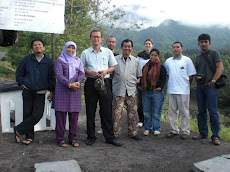
The focus group discussion looked at how Media, non-faith and faith-based NGOs assess their standard of accountability in humanitarian work, for example in responding to disaster, helping the refuges, distributing aid for disaster survivors etc.
This discussion is a continuation on the field research that has been done a couple of months ago in four provinces (Aceh, Yogyakarta, West Sumatera and West Java).
“This focus group discussion aims to map and hear what the ladies and gentlemen’s perspective is on accountability, based on what we have done so far. We want to see this as the data for the next step in formulating a standard of accountability in humanitarian fund management in Indonesia,” Hamid Abidin, Director of PIRAC said in his opening speech.

Humanitarian Forum Indonesia was represented by Sudibyo Markus, who opened the event by saying: “This is great opportunity for humanitarian actors in Indonesia to unite their perspective on accountability and to work towards their awareness in accountability.”
The event, attended by participants from both faith and non-faith based NGOs and Media, is only the beginning to a series of focus group discussions on formulating a draft for a standard and mechanism of accountability in humanitarian management of funds in Indonesia.
The series, supported by the Ford Foundation, will culminate with the promoting, disseminating and training of the agreed accountability standard.
Tuesday, 11 January 2011
Presenting PASTI in the Smart House Management Workshop

 At this event, HFI were invited to share their expertise and offer a training regarding the PASTI tool (Preparedness Assessment Tool for Indonesia). PASTI is a tool aiming to assess the preparedness to deal with disaster hazards in a given region. PASTI was created by the HFI and UNESCO in 2009, to answer the need for disaster risk reduction programmes in Indonesia as the country is prone to various natural disasters.
The programme above is also called "Smart Indonesia", being aimed to promote the national movement on how to manage "Smart Houses" as part of a government support programme for disasters risk reduction. A "Smart House" is a regional centre of information and activities in reducing disaster risks. The Houses are being built in many provinces in Indonesia.
The other speaker at this event, prof. Arief Rachman is an important national figure in education. His speech was on how to manage effectively a Smart House and how to make everyone coming to a Smart House enjoy their learning experience. He said that such programmes should be set up in other parts of Indonesia, especially in the most prone disaster areas.
Humanitarian Forum Indonesia remains committed to making Indonesia a more disaster resilient country via capacity building and empowering local communities.
Wednesday, 24 November 2010
Friday, 5 November 2010
Monday, 24 May 2010
HFI and UNESCO present PDATES: Continuing Teaching and Learning in Emergency Situations
After working together intensively for more than four months, finally HFI and UNESCO have finished creating PDATES: the Preparedness Disaster Assessment Tool in Education Sector. PDATES is a device to assess the damage caused by disaster to the ability to provide education. It takes the form of a guidebook which helps measure damage in education facilities and offers proposals to make the teaching and learning process run as well even in emergency situation.
The unique book complements existing tools in Indonesia used in assessing the damages of disaster affect. Mostly, existing devices in this country assess the general damage caused by disaster: houses, public facilities, and so on. None of them specifically deal with damage to the education sector. PDATES assesses the needs, challenges, and the possibilities of carrying on with teaching and learning in emergency period. We’re working to save children’s education and to heal the traumas caused by losses of life, home and so on after disaster strikes.
Education is the right of every Indonesian. It’s also vital not to lose a generation of educated citizens because of a disaster like the Padang Earthquake; ignorance is a deadly enemy to prosperity, but educated citizens are a vital part of creating a stable, sustainable future for our country. And often after a disaster has struck, school provides children with an important routine in the face of chaos. So to give people the support they need, we must keep the teaching and learning in every situation.
The PDATES book will be given free to a thousand schools in Indonesia from elementary level up to senior high schools. It can also be expected to enhance Indonesian teachers’ knowledge about disaster risk reduction.
Several senior government and humanitarian departments who deal with disaster and education, including the ministry of national education and National Agency for Disaster Reduction in Indonesia, have given a very positive response to this book.
We hope that the PDATES will be very helpful and meaningful for the progress of the disaster risk reduction effort in Indonesia.
The unique book complements existing tools in Indonesia used in assessing the damages of disaster affect. Mostly, existing devices in this country assess the general damage caused by disaster: houses, public facilities, and so on. None of them specifically deal with damage to the education sector. PDATES assesses the needs, challenges, and the possibilities of carrying on with teaching and learning in emergency period. We’re working to save children’s education and to heal the traumas caused by losses of life, home and so on after disaster strikes.
Education is the right of every Indonesian. It’s also vital not to lose a generation of educated citizens because of a disaster like the Padang Earthquake; ignorance is a deadly enemy to prosperity, but educated citizens are a vital part of creating a stable, sustainable future for our country. And often after a disaster has struck, school provides children with an important routine in the face of chaos. So to give people the support they need, we must keep the teaching and learning in every situation.
The PDATES book will be given free to a thousand schools in Indonesia from elementary level up to senior high schools. It can also be expected to enhance Indonesian teachers’ knowledge about disaster risk reduction.
Several senior government and humanitarian departments who deal with disaster and education, including the ministry of national education and National Agency for Disaster Reduction in Indonesia, have given a very positive response to this book.
We hope that the PDATES will be very helpful and meaningful for the progress of the disaster risk reduction effort in Indonesia.
Wednesday, 7 April 2010
Reviewing Disaster Risk Reduction Policies in West Sumatera
After the Earthquake in 2007, the Government of West Sumatera made many policies in disaster risk reduction which were supported by national government, NGOs, INGOs and other important actors. The first earthquake made the West Sumatera Government aware that their territory is at high risk of earthquakes followed by tsunami for the forseeable future. And so, many policies have been formed and disaster risk reduction programs instigated to reduce the loss of life and damages.
But when a second earthquake hit Pariaman West Sumatera in 2009, the damages and loss of life were still at a high rate. 1,117 people were killed, and thousands more heavily injured. Meanwhile the total lost of infrastructure damages - civilian houses, public facilities, government building - has reached nearly 3 million USD.
The question is, how could the second earthquake have still made such a huge loss of lives and damages when the West Sumatera Government had implemented its disaster risk reduction programme since 2007? How effective were the policies of disaster risk reduction, and the Government programs for rehabilitation and reconstruction 2009-2011?
HFI, in collaboration with Oxfam GB, is accordingly conducting research in West Sumatera. The team, consisting of five researchers, is reviewing the disaster risk reduction policies in West Sumatera regarding the rehabilitation and reconstruction action plans. The research started at the end of February and will end in April 2010.
We expect this research to present a clear picture about the problems in implementation of disaster risk reduction in West Sumatera so far, and to monitor its progress. The report should also be able to give some recommendations in Reconstruction and Rehabilitation action Plan in West Sumatera going forward. It’s the hope of the HFI team, and of our partners, that in the event of another earthquake, this research will mean we’ll see a significant reduction in damage and loss of life.
Subscribe to:
Posts (Atom)